-

-
Early Signs of Kidney Disease: Symptoms, Risk Factors, and When to Seek Help
- mediluxayurveda4 41 Minutes+ 1
The kidneys are important to good health. They remove excess fluid and waste from the blood, maintain proper levels of key minerals and help control blood pressure. As the kidney function decreases, there is a risk that waste products and fluid will accumulate in the body.
Early Signs of kidney disease can help individuals know when to get medical advice. Chronic kidney disease (CKD) can occur silently over time, though, without any signs or symptoms. Those at higher risk should have regular health checks and the appropriate blood and urine tests.
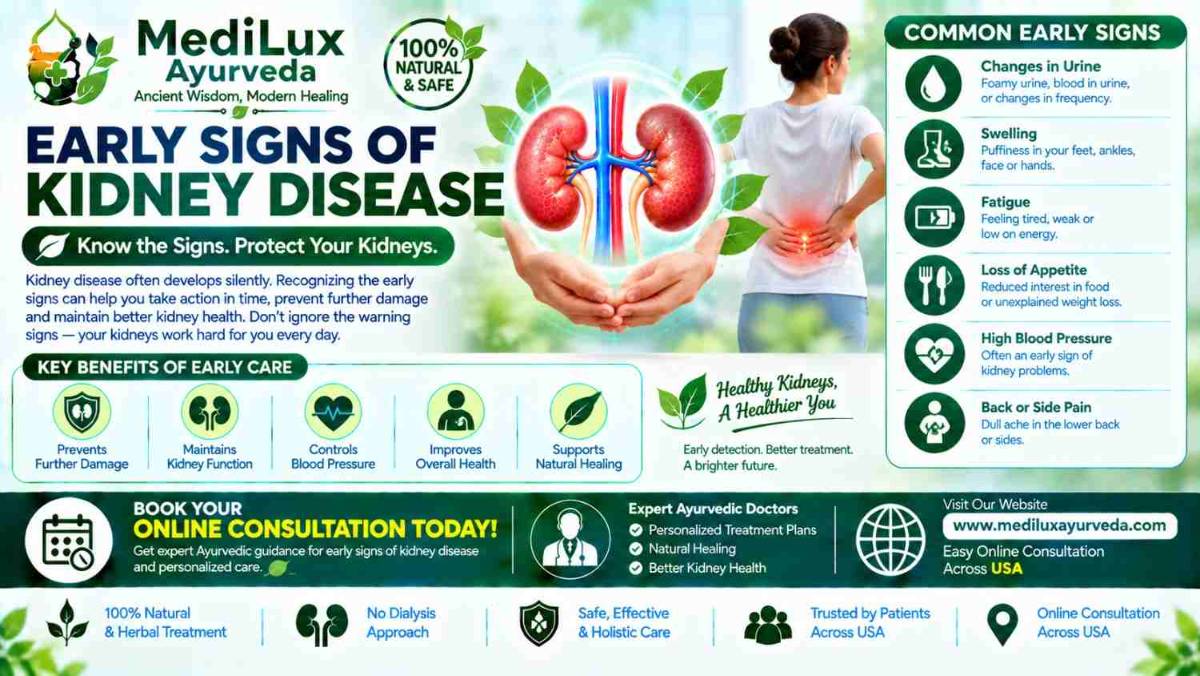
MediLux Ayurveda offers learning materials and online consulting for people in the USA and UK who are interested in learning more about the wellness of the kidney.
What are the early signs of the kidney disease?
Kidney disease is different for different people. Some people might experience physical changes, but others might not even be aware of these changes and feel fine even if their kidney function is lowered.
1. Changes in Urination
When urination changes in frequency, quantity or color, it may warrant medical attention. Foamy urine may sometimes suggest that there is protein in the urine; the color of the urine may be any of the following: milky, red, or yellow.The urine may be milky, red, or yellow, and sometimes foamy, suggesting protein in the urine.
Any time blood is found in the urine, it is important to talk to your health care provider. However, alterations in urination do not confirm the presence of kidney disease.
2. Swelling in the Feet, Ankles, or Face
Kidneys play a role in controlling fluid levels. If their job fails to work properly, they can cause swelling of the feet, ankles, legs or around the eyes.
Other health problems such as heart failure or liver, vein or heart disease can also cause swelling. If the swelling continues or is not known why, see a health care provider.
3. Unusual Fatigue or Weakness
Fatigue may be a problem for those with kidney disease. Low kidney function can help lead to anemia and other changes that impact energy.
There are a number of potential causes for fatigue such as sleep disturbances, or low levels of certain nutrients or other medical conditions. A health care provider can assist in determining the cause.
4. Changes in Appetite or Nausea
For some people, the kidneys have caused them to feel weak, have lost their appetite, or have a bad taste in their mouth. These symptoms may be due to build up of substances in the body.
Digestive issues are present in numerous disorders, and medical evaluation is required to ascertain the cause of the digestive symptoms.
5. Muscle Cramps
People with kidney disorders can sometimes experience muscle cramps, which could be due to fluid or electrolyte imbalance. Other causes of cramps are exercise, side effects of certain medications, or other conditions.
If kidney function is impaired, do not use potassium, Magnesium or other supplements for cramps without medical advice.
6. Difficulty Concentrating or Sleep Problems
Some individuals with kidney disease may have trouble sleeping, have trouble with concentration or may not be as clear as they were before the kidney disease. The symptoms are non-specific and may be due to a number of causes.
If they continue or are accompanied by other worrisome changes, get a professional evaluation.
Who Is at Greater Risk of Kidney Disease?
Some of the risk factors for kidney disease include certain health issues and lifestyle choices. These include:
- Diabetes
- High blood pressure
- Disease of the heart or blood vessels
- Family history of kidney disease.
- AKI was present in the past.AKI had been seen previously.
- Some type of inherited kidney disease
- Certain medicines that could have a bad effect on the kidneys may be used for a long time.
Those with these risk factors should consider having regular checks on their kidneys, even if they feel well.
How Is Kidney Disease Detected Early?
Symptoms do not necessarily indicate kidney disease. Doctors often rely on two types of kidney tests to determine kidney function.
Blood testing: A blood creatinine test can be used to get an estimate of the glomerular filtration rate (eGFR), which is a measure of how well the kidneys remove waste.
Urine testing: Urine albumin to creatinine ratio (uACR) that measures whether there is any damage to the kidneys by detecting a protein called albumin. Additional urine tests may be ordered based on the symptoms and medical history.
Other methods of assessing risk include blood pressure checks and reviewing medications, family history and existing health conditions. Abnormal results might require further investigation or repetition.
How Can You Support Kidney Health?
While not all kidney disease is preventable, some people may be able to take steps to help lessen the risk of kidney disease or slow the progression of kidney disease.
Control blood pressure and blood sugar: Take medicines as directed by your health care professional and follow the recommendations.
Follow a well-balanced diet: Consume a healthy diet and avoid too much sodium. Individual dietary recommendations for protein, potassium, phosphorus, and fluid may be necessary for individuals with an established diagnosis of kidney disease.
Stay physically active: Consistent exercise to maintain and can aid cardiovascular health, weight management and blood pressure control.
Avoid smoking: Smoking raises the risk for the heart and blood vessels and can damage them.
Check medicines and supplements: Medications, herbs or supplements can be toxic to kidney patients. Talk to a health care professional about their use.
Attend recommended checkups: Testing is especially important for individuals who have diabetes or hypertension or have other risk factors for kidney disease.
When Should You Seek Medical Attention?
If you notice a medical change in urination, any swelling, unusually tired fatigue or other unusual symptoms, arrange a medical appointment. Those who are at higher risk should consult their health care provider about tests to check kidney function.
If shortness of breath, chest pain, confusion or urine output is significantly reduced, especially if these symptoms have developed or are worsening, seek urgent medical attention.
Early evaluation can help determine if treatment or monitoring is necessary and what the cause of symptoms is.
Explore Kidney Wellness Resources with MediLux Ayurveda
If you are looking for more information about kidney wellness and complementary Ayurvedic treatments, you can find it here at MediLux Ayurveda and can consult with them online from the USA and UK.
Individuals who are considering using herbal products or supplements should speak with a nephrologist or pharmacist to determine whether any risk exists with these products, particularly when kidney function is decreased, or whether they interact with the medications they are taking. Wellness programs should not be used as a substitute for medical diagnosis, prescribed treatment or recommended follow-up care.
Book Your Online Consultation
It is important to know about the Early Signs of Kidney Disease so you can take action for your health. Discover the kidney health information offered by MediLux Ayurveda and see what their online consultation services are.
Go to the website and complete the form to arrange for a consultation online.
Medical disclaimer: This article is for educational purposes only and does not replace professional medical advice. Kidney disease cannot be diagnosed by symptoms alone. Consult a qualified healthcare professional for appropriate assessment and testing.
healthcare
|
|
|---|---|
|
|
|
- Time: 0.078, SQL: 13