-

-
How to plan your dream Tanzania safari for an unforgettable adventure
- blitzmaz 5 Months+ 46
Tanzania stands as the crown jewel of African wildlife destinations, offering a landscape where the rhythm of nature dictates the flow of time. For travelers seeking an authentic connection with the wild, a Tanzania safari represents the ultimate pilgrimage. This vast East African nation provides a sanctuary for the largest concentration of animals on the continent, ranging from the endless plains of the Serengeti to the mist-covered depths of the Ngorongoro Crater. Planning such a journey requires careful consideration of timing, geography, and personal preferences to ensure that every moment spent in the bush is maximized for wonder and discovery. The term safari itself is derived from the Swahili word for journey, which originally comes from the Arabic safar, reflecting the deep-rooted history of travel and exploration in this region according to Wikipedia. Today, the modern Tanzania safari has evolved into a sophisticated blend of conservation, luxury, and raw adventure, attracting millions who wish to witness the theater of the natural world firsthand.
Navigating the legendary northern circuit and beyond
The Northern Circuit is undoubtedly the most popular route for those embarking on a Tanzania safari, primarily because it hosts some of the most iconic landmarks in the world. Arusha serves as the gateway to this circuit, a bustling city situated at the foot of Mount Meru. From here, travelers typically venture to Tarangire National Park, famous for its massive elephant herds and ancient baobab trees that pierce the skyline. Tarangire provides an excellent introduction to the diverse ecosystems of Tanzania, especially during the dry season when wildlife congregates around the Tarangire River. Moving further north, Lake Manyara National Park offers a different landscape characterized by its alkaline lake, lush groundwater forests, and the famous tree-climbing lions. This park is a paradise for birdwatchers, as thousands of flamingos often tint the shoreline pink, creating a vibrant contrast against the deep green foliage.
The true highlight for many remains the Serengeti National Park, a name that has become synonymous with the quintessential African safari. Spanning nearly 15,000 square kilometers, the Serengeti is the stage for the Great Migration, an annual movement of over two million wildebeest, zebras, and gazelles. This spectacular event is a continuous cycle, with the herds moving clockwise across the ecosystem in search of fresh grazing lands. According to recent reports from Google News, luxury camps in the Serengeti Western Corridor are seeing a surge in demand for 2026, as travelers seek front-row seats to the dramatic river crossings that occur during the migration. Witnessing a predator-prey interaction on these open plains is a humbling experience that highlights the delicate balance of life in the wild.
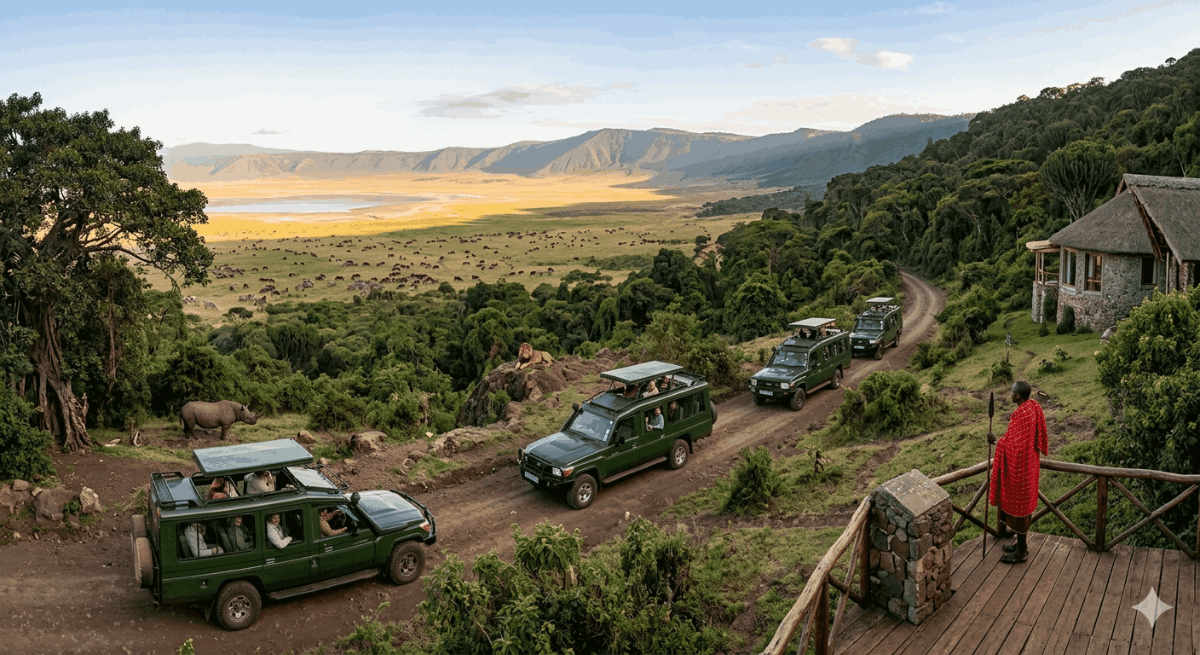
Adjacent to the Serengeti lies the Ngorongoro Conservation Area, home to the world largest inactive, intact, and unfilled volcanic caldera. The Ngorongoro Crater acts as a natural enclosure, supporting a dense population of wildlife including the endangered black rhino. Descending into the crater is like entering a lost world where lions, hyenas, and hippos coexist in a confined yet fertile space. Because the animals remain within the crater year-round, it offers exceptional game viewing at any time. For those looking for a more remote experience, the Southern Circuit provides a rugged alternative. Nyerere National Park, formerly Selous Game Reserve, and Ruaha National Park offer vast wilderness areas with fewer tourists, allowing for a more intimate encounter with nature. These parks are ideal for walking safaris and boat trips, providing perspectives that are often missed when traveling solely by vehicle.
Understanding the logistics of timing and seasonal shifts
Timing is perhaps the most critical factor when organizing a Tanzania safari. The country experiences two distinct rainy seasons and two dry seasons, each offering a unique perspective on the landscape. The long dry season, which runs from late June to October, is widely considered the best time for wildlife viewing. During these months, the vegetation is thin, making it easier to spot animals, and the lack of water inland forces wildlife to gather around permanent water sources. This period also coincides with the Great Migration river crossings in the northern Serengeti, providing high-stakes drama for photographers and nature enthusiasts. However, because this is the peak season, popular areas can become crowded, and prices for accommodation often reach their highest points.
The short dry season occurs from January to February and is another fantastic time to visit, particularly in the southern Serengeti. This is the calving season for the wildebeest, where hundreds of thousands of calves are born within a few weeks. The abundance of vulnerable young animals attracts a high concentration of predators, leading to intense wildlife encounters. For those who prefer lush green scenery and lower prices, the emerald season or the wet season from March to May offers a different kind of beauty. While some roads may become difficult to navigate due to heavy rains, the parks are quiet, the air is clear, and the birdlife is spectacular. Many lodges offer significant discounts during this time, making it an attractive option for budget-conscious travelers who do not mind a bit of rain.
Choosing the right type of accommodation is also essential for a fulfilling experience. Options range from basic mobile camping, where you sleep in tents close to nature, to ultra-luxury lodges that provide every modern amenity imaginable. In recent years, there has been a significant shift toward wellness-focused travel. As highlighted by Forbes, the rise of wellness safaris in Africa reflects a growing desire for restorative experiences that combine mindfulness with wilderness. Many high-end camps now offer bush yoga, meditation sessions, and spa treatments that use local ingredients, allowing guests to recharge their spirits while surrounded by the sights and sounds of the savannah. Whether you choose a rustic camp or a lavish villa, the goal remains the same: to immerse yourself in the natural world and gain a deeper appreciation for the environment.
Integrating conservation and cultural immersion into your trip
A modern Tanzania safari is about more than just checking the Big Five off a list; it is about understanding the complex relationship between wildlife, the environment, and local communities. Conservation efforts are at the heart of the safari industry, and many operators now prioritize sustainable practices. Travelers are encouraged to choose lodges that utilize solar power, minimize plastic waste, and contribute directly to local conservation projects. By selecting eco-friendly options, you ensure that your visit helps protect these fragile ecosystems for future generations. Many parks now employ local rangers and guides who possess an intimate knowledge of the land, providing guests with insights that go far beyond what can be found in a guidebook.
Cultural immersion is another vital component of a well-rounded Tanzania safari. The country is home to over 120 different ethnic groups, including the Maasai, Hadzabe, and Datoga. Engaging with these communities in a respectful and meaningful way can be one of the most rewarding aspects of the journey. For instance, visiting a Maasai boma allows travelers to learn about their traditional pastoralist lifestyle, their vibrant beadwork, and their deep-rooted customs. Similarly, spending time with the Hadzabe, one of the last remaining hunter-gatherer tribes in the world, offers a rare glimpse into a way of life that has remained unchanged for millennia. These interactions foster mutual understanding and ensure that the benefits of tourism are shared with the people who call these lands home.
Safety and preparation are also paramount when heading into the bush. It is important to work with a reputable tour operator who provides well-maintained vehicles and experienced guides. Health considerations, such as malaria prophylaxis and vaccinations, should be discussed with a medical professional well in advance of the trip. Packing the right gear, including neutral-colored clothing, binoculars, and a high-quality camera, will enhance your ability to observe and document the wildlife. Remember that you are a guest in the animals' habitat; following the instructions of your guide and maintaining a respectful distance is essential for both your safety and the well-being of the wildlife. By approaching the experience with curiosity and respect, you will find that a Tanzania safari is a life-changing event that resonates long after you return home.
Conclusion
A Tanzania safari is an invitation to witness the raw power and beauty of the natural world in its purest form. From the thundering hooves of the Great Migration to the silent gaze of a leopard in an acacia tree, the experiences gathered here are incomparable. By planning your trip with a focus on timing, choosing the right circuit, and embracing sustainable and cultural practices, you can create a journey that is both personally fulfilling and environmentally responsible. The landscapes of Tanzania are calling to those who seek adventure, tranquility, and a deeper connection to the earth. Now is the time to start your journey and discover why this East African paradise remains the ultimate destination for explorers. Book your adventure today and prepare to be forever changed by the spirit of the wild.
travel
|
|
|---|---|
|
|
|
- Time: 0.084, SQL: 14