-

-
Kidney Qi Deficiency Symptoms: Understanding the Traditional Perspective
- mediluxayurveda4 1 Days+ 7
The theory of Kidney Qi Deficiency Symptoms is based on TCM, in which “Kidney Qi” is a functional model in traditional medicine, not a medically diagnosed problem with the kidneys. It is crucial to recognize the difference between the two while examining traditional medicine practices.
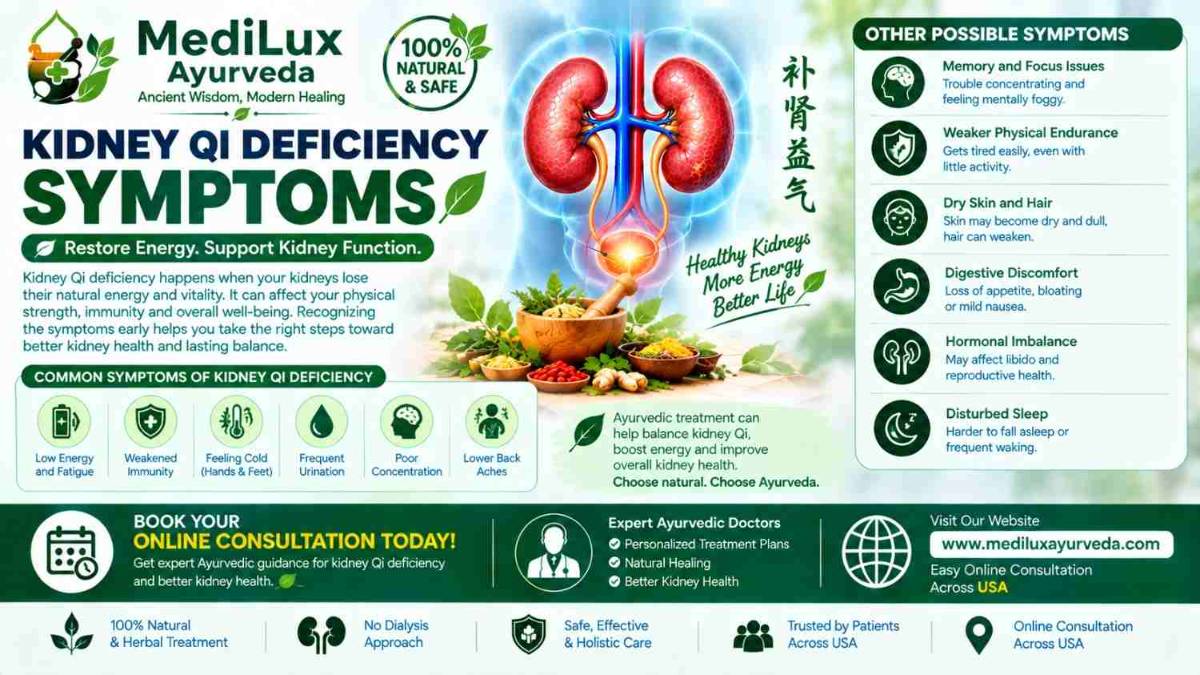
In traditional medicine, the principle of pattern differentiation is employed to take into account combinations of symptoms, as opposed to one symptom. Among the most frequently reported features in the kidney-deficiency patterns that were recently reviewed in kidney-deficiency research were fatigue, weakness or discomfort around the lower back and knees, urinary incontinence, tinnitus, and diminished vitality.
What Is Kidney Qi Deficiency?
In traditional Chinese medicine, the concept of QI is most often defined as active and vital energy that is used in physiology. Kidney Qi Deficiency is a traditional pattern of signs & symptoms.
This is not the same as findings of reduced kidney function on medical tests like estimated glomerular filtration rate (eGFR), blood creatinine, or urine tests. Someone with the symptoms of a traditional pattern does not necessarily have a kidney disorder.
Common Kidney Qi Deficiency Symptoms
This traditional pattern has symptoms that differ from person to person. Several features described in traditional medicine literature have been included in the pattern assessment, which are suggested to be taken into consideration in pattern assessment.
The following are commonly mentioned Kidney Qi Deficiency Symptoms:
- Fatigue or low energy levels, that last for a long time.
- Lower back or knee weakness
- Urinary control problems and/or urinary urgency.
- Hearing problems or tinnitus (ringing in the ears)
- Reduced physical strength
- Decreased libido or sexual function
- Strength or energy level is low in general.
In traditional Chinese and Korean medicine, a few of these features were found to be screening criteria for kidney-deficiency patterns in a systematic review and expert consensus published in 2025.
These symptoms are non-specific and can be caused by various factors. Rather, they should not be relied upon as the only way to diagnose kidney disease.
Kidney Qi Deficiency vs. Kidney Disease
The first and possibly most significant difference is the concept of “Kidney Qi deficiency” is not synonymous with medical kidney disease.
The clinical history, physical exam, blood tests, imaging and further appropriate tests are used to evaluate medical kidney conditions. A traditional pattern assessment uses a different paradigm, and may include more of a composite of individual characteristics and symptoms.
While a wellness exam is important, people who have any peculiar or unusual symptoms like persistent changes in the urine, swelling, extreme fatigue, back or flank pain, blood in the urine should seek appropriate medical evaluation.
How Is Kidney Qi Deficiency Traditionally Assessed?
Generally, traditional medicine does not recognize a pattern with just one symptom. For making a traditional pattern assessment, the practitioner has to take several factors into consideration: signs, lifestyle factors, diet patterns and other individual factors.
Studies on TCM diagnosis of Qi deficiency have also discovered that more than one symptom/sign and more than one contextual factor are used instead of only one.
One of the reasons why it is important to use a generalised list of symptoms rather than a personal diagnosis is that it is individualized.
Can Ayurvedic Guidance Support Kidney Wellness?
Another traditional health system is Ayurveda, which is also individualistic in approach to diet and lifestyle, as well as wellness. Individualized Ayurvedic advice could be used as an alternative wellness method for those who wish to pursue traditional health approaches.
In the USA and UK, people would like to consult with Ayurvedic practitioners about their unique wellness issues, nutrition patterns, and way of life through online consultations.MediLux Ayurveda has online consultations for people in the USA and UK, who want to talk to ayurvedic practitioners about their specific health troubles, eating routines, and lifestyle factors.
The traditional advice for wellness should be used in conjunction with, not in lieu of, proper medical assessment and care. This is especially important if symptoms may be related to a kidney or urinary problem.
Making Informed Kidney-Wellness Choices
Knowledge of Kidney Qi Deficiency Symptoms can be helpful in understanding some of the patterns of weakness, fatigue, urinary issues and diminished vitality as outlined in Traditional Medicine. Traditional descriptions should not be taken as an indication of kidney disease, however, and should not replace medical testing.
A customized approach may enable individuals to grasp their wellness goals and what lifestyle and dietary modifications may be suitable.
If you are looking for customised Ayurvedic wellness advice in the USA or the UK, you can consult with MediLux Ayurveda mentally and easily online.
Find out more and make your Online Appointment with MediLux Ayurveda
Note: This article is for information only and does not diagnose or treat kidney disease. If symptoms persist or become a problem, seek an evaluation from a qualified health care provider.
healthcare
|
|
|---|---|
|
|
|
- Time: 0.064, SQL: 13