-

-
Why Kidney Filtration Is Not Working: Causes, Symptoms, and Kidney Wellness
- mediluxayurveda4 16 Hours+ 6
The function of kidneys is critical in the maintenance of one’s general well-being through the filtration of toxins and excess water from the bloodstream. If this is not happening in an efficient manner, there will be the accumulation of toxins and fluids that might have an impact on other organs. Learning why kidney filtration is not working can help you to identify any signs you should be looking out for. MediLux Ayurveda provides online consultation services to people living in the USA and the UK.
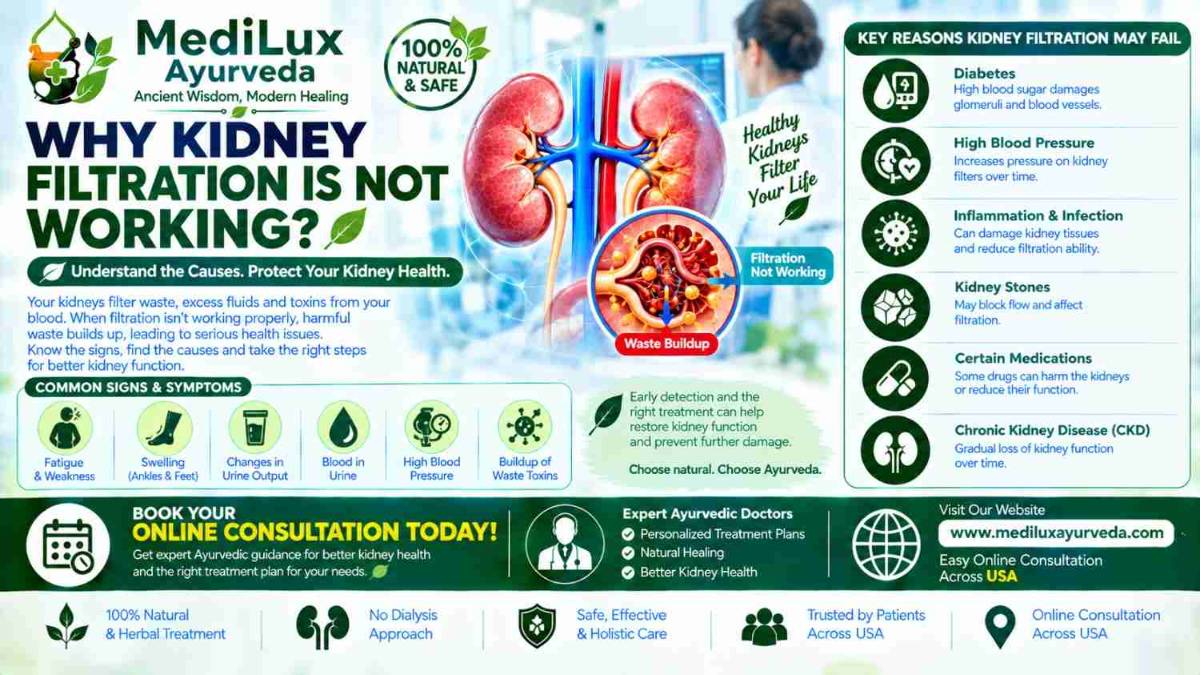
How Kidney Filtration Works?
Millions of very small filtering units (nephrons) are located in the kidneys. Each nephron contains a glomerulus that filters blood and tubules that aid in water, electrolyte and other substance regulation.
A healthy kidney filters out waste products and unneeded water from the body and keeps in substances that the body needs. They also play a role in regulating blood pressure, maintaining electrolyte balance, supporting production of red blood cells, and aiding with bone health.
The estimated glomerular filtration rate (eGFR) is used to measure the filtration of the kidney, and is calculated from blood tests and other factors. Urine tests, imaging and medical history can also help healthcare workers get an understanding of kidney function.
Common Reasons Kidney Filtration May Decrease
There are a number of conditions that make the kidneys less effective at filtering blood. It is vital to pinpoint the underlying cause as this will determine the treatment required.
Chronic Kidney Disease
Chronic kidney disease (CKD) occurs when the kidneys are damaged or fail to function normally for a long period of time. Two common causes are diabetes and high blood pressure. Other factors include, inherited kidney diseases, auto-immune diseases and recurrent kidney disorders.
CKD can gradually get worse, and it can go undetected in its early stages. Ongoing testing can facilitate the detection of change in advance of more apparent markers.
Diabetes and High Blood Sugar
If the blood glucose stays high for an extended period of time, the small blood vessels in the kidneys can become damaged. Over time, this damage may affect the kidneys' filtering ability.
Individuals with diabetes can get regular blood glucose, blood pressure, eGFR and urine albumin measurements that their healthcare provider recommends.
High Blood Pressure
If the blood vessels in the kidneys become damaged due to elevated blood pressure, they are less able to function effectively. High blood pressure can also result from kidney disease, which may exacerbate this problem.
Taking the medicine and keeping the blood pressure under control will help to prevent further damage.
Acute Kidney Injury
Acute kidney injury is when the kidneys function decline rapidly. Some of the causes include too much dehydration, serious infections, loss of a lot of blood, urinary obstructions and some medications.
It is important to have a timely medical evaluation for acute kidney injury. The treatment of the underlying cause may be important, and sudden changes in urine output or any other worrisome symptoms should not be overlooked.
Kidney Infections or Urinary Blockages
Some kidney infections can lead to inflammation and, in some instances, kidney damage. Other conditions that block the passage of urine, like kidney stones or an enlarged prostate, can also disrupt normal urinary function.
If signs indicate infection or obstruction, early evaluation should be conducted especially if there is pain, fever, vomiting, or a blockage in urination.
Medications and other health conditions
Certain medications may have an impact on kidney function, particularly for those with kidney disease and/or dehydration. Some pain relievers, prescription drugs, or supplements may need to be closely evaluated.
Do not discontinue medication without health care provider's directions. A healthcare professional will be able to check medicines and supplements and make any necessary changes.
Signs That May Indicate Reduced Kidney Function
Kidney disease may occur with no symptoms, particularly in the early stages. Symptoms may include:
- Elevated levels of swelling in the feet, ankles, legs or eyes.Swelling of feet, ankles, legs or eyes.
- Alterations in urination (frequency or amount).
- Fatigue or weakness that doesn't go away.
- Loss of appetite or nausea.
- Difficulty concentrating.
- Breathlessness due to accumulation of fluid or other complications.
- High blood pressure.
- The urine may be foamy, and sometimes protein may appear in the urine.
These symptoms may be caused by something other than kidney disease. Medical testing is required to assess whether there is a decreased number of functioning kidneys and the cause of this.
How Is Kidney Filtration Evaluated?
If kidney function is a concern, a health care professional may suggest some testing.
Blood creatinine test: Determination of the creatinine in the blood which is a waste product that is used to help estimate the rate of kidney filtration.
Estimated glomerular filtration rate (eGFR): An estimate of how well the kidneys can clear blood.
Urine albumin test: Measures the presence of albumin, a protein that can be excreted in the urine if the filters in the kidneys are damaged.
Urine tests: Tests for blood, protein, and other abnormalities in the urine.
Measurements of blood pressure: Assesses a risk factor for kidney damage.
Imaging tests: If there is a suspicion of a urinary blockage or a structural problem, imaging may be indicated (such as ultrasound).
However, if we have one abnormal finding, it doesn't necessarily mean we have chronic kidney disease. Results are analyzed in the context of other clinical factors and tests may be repeated to determine if changes are ongoing or sudden.
Supporting Kidney Health Through Daily Habits
Maintaining a healthy lifestyle can contribute to overall health and potentially help control some of the risk factors for kidney disease. If the quality of kidney function is affected, however, lifestyle changes can't be used to treat the problem instead of medical treatment.
Helpful considerations include:
Control blood pressure: Take your medications as directed by a medical provider.
Follow diabetes management plan: Individuals with diabetes should check their blood glucose according to their diabetes management plan.
Eat a kidney-friendly diet: The food plan needs to be balanced and consider the kidney's function and each person's nutritional needs.
Reconsider sodium intake: Don't increase sodium when it is not needed, and limit it when necessary, to help control blood pressure.
Maintain a proper fluid balance: This depends on the individual, and specific fluid intake restrictions may be required for those with advanced kidney disease.
Take medicines with caution: Only take medicines that are prescribed by a healthcare professional; do not take new medicines, herbal remedies, or supplements unless recommended by a healthcare professional.
Regular checkups: Checkup periodically to observe changes and direct care.
Individualized recommendations for protein, potassium, phosphorus, sodium, and fluid intake may be needed for people with kidney disease. Do not engage in restrictive eating or in taking large doses of vitamins without medical advice.
Exploring Complementary Ayurvedic Kidney Wellness Guidance
Some people use Ayurveda to complement their wellness, food and lifestyle practices. Individual consultations can be a chance to review personal wellness needs and lifestyle.
MediLux Ayurveda provides Ayurvedic advice that is complementary, on the subject of diet, lifestyle and overall kidney health and wellness, to those in the USA and UK who find themselves seeking guidance via online consultation.
Whether you are investigating why kidney filtration is not working, it is vital to keep in mind that there is a need to evaluate kidney filtration properly. There is no proof in Ayurveda that it can turn back kidney damage or kidney filtration. Herbal products can also have interactions with medicines or be harmful to people with poor kidney function.
Complementary wellness information should then be thought about in conjunction – not in lieu of – nephrology treatment, prescribed medications, and medically recommended treatment.
Take the Next Step Toward Informed Kidney Care
There are several reasons for changes in kidney filtration, and what to do depends on the cause of the change. Identifying signs of potential kidney disease, ensuring proper testing and adhering to medical advice to take care of your kidneys is crucial.
For those in the USA or UK, interested in personalized complementary Ayurvedic advice on diet, lifestyle and overall wellness, MediLux Ayurveda has an online consultation service to provide convenient access.
Explore the available consultation options and learn more about kidney wellness.
Visit MediLux Ayurveda and Book Your Online Consultation
The information provided is for educational purposes only and should not replace medical advice, diagnosis or treatment by a medical professional. If you have a sudden decrease in urine output, trouble urinating, are very sick or have any symptoms that are a concern, see the doctor right away. Always ask a healthcare provider before starting or stopping medications, diet or supplements.
healthcare
|
|
|---|---|
|
|
|
- Time: 0.025, SQL: 13