-

-
Best Diet for Kidney Health: A Guide to Healthy Eating and Kidney Wellness
- mediluxayurveda4 7 Hours+ 8
Kidneys are an important organ that maintains general well-being. They remove waste products from the blood, excess fluid, balance electrolytes and aid in regulating blood pressure. Eating a healthy diet can promote kidney function and overall health. It is crucial for people who wish to live a healthy lifestyle or treat a kidney disease to know what is included in the Best Diet for Kidney Health.
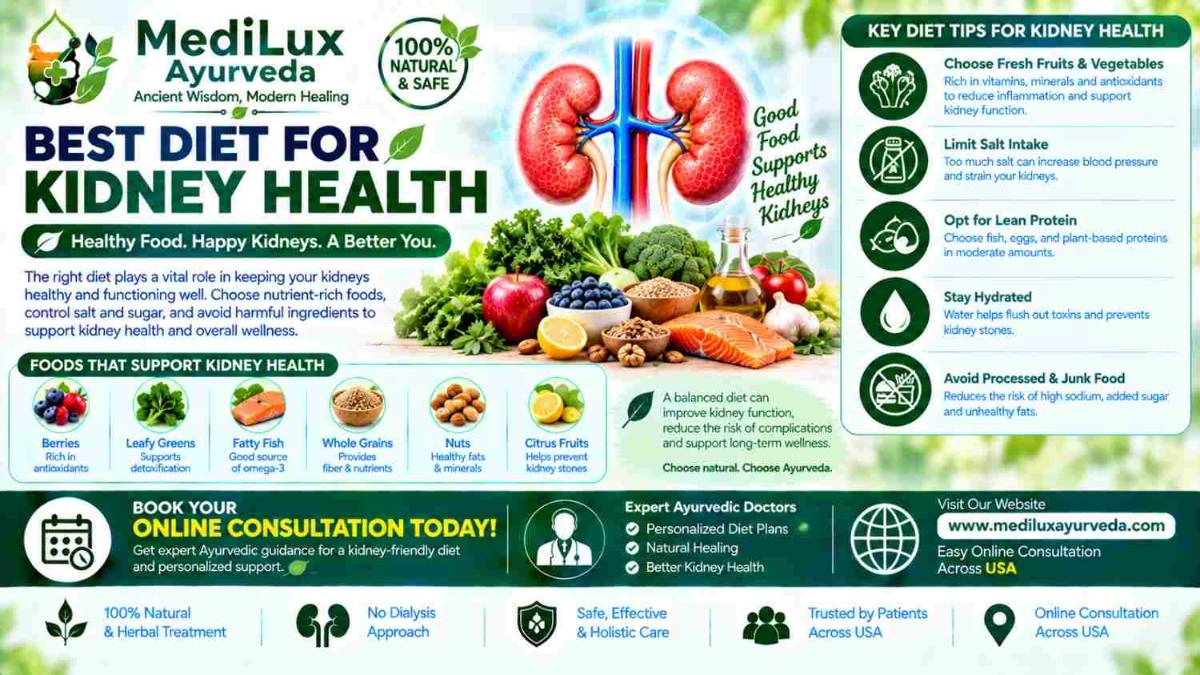
MediLux Ayurveda provides education on kidney health and Ayurvedic lifestyle techniques for people in the USA and UK. By making wise food decisions and following suitable professional advice, individuals can make proactive efforts to maintain good health.
Why Is Diet Important for Kidney Health?
Foods and drinks eaten every day affect blood pressure, blood sugar, fluid balance and how much of some minerals are filtered from the blood by the kidneys. These important functions can be supported by a balanced eating pattern.
But there are no simple diets that are suitable for each and every person. Nutritional needs can vary by age, kidney status, history, medications, and other factors like diabetes or high blood pressure, etc.
Individual advice for people with chronic kidney disease should be sought on sodium, potassium, phosphorus, protein and fluids. Significant changes in diet without medical guidance may lead to nutritional imbalances at times.
1. Include Suitable Fruits and Vegetables
Vitamins, minerals, fibre and antioxidants in fruits and vegetables help to promote general good health. Produce such as apples, berries, grapes, cabbage, cauliflower and other fruits and vegetables are allowed in a balanced diet, depending on the nutritional needs of the individual.
In the case of kidney disease, potassium could play a role in determining which fruits and vegetables are suitable. In some people, there is a need to restrict high potassium foods, in others, there is not.
A variety of acceptable foods and measuring out portions can help keep an eating plan balanced. The recommendations are made by a healthcare professional or a registered dietitian depending on the laboratory results and kidney function.
2. Choose Appropriate Protein Sources
Protein is important for muscle growth, repairing tissues and normal body functions. Some appropriate sources can include eggs, fish, poultry, beans, lentils and other foods as appropriate to the individual diet and medical condition.
Individuals with chronic kidney disease may benefit from changing their protein intake based on the stage of their disease and their treatment plan. Eating too much protein, especially by taking unnecessary supplements, may not be suitable for some people.
It is not advisable to cut out protein or diets without consulting a health care professional.
3. Reduce Excess Sodium
Excessive sodium consumption may lead to high blood pressure and water retention, putting extra pressure on the kidneys. Too much sodium can be an issue when it comes to a kidney friendly diet.
Helpful habits include:
- Restricting highly processed and packaged foods.
- Reading the sodium content of food labels.
- Substituting salt with herbs, spices, and lemon for taste.
- Cut back on eating salty foods and processed meats often.
- Making more meals at home, if possible.
Individual advice for the daily sodium intake should be followed by individuals with high blood pressure or kidney disease.
4. Stay Properly Hydrated
Water is important for normal body function and assists the kidneys to eliminate wastes in the urine. In addition, drinking plenty of water can help prevent some types of kidney stones.
However, more water isn't necessarily good. Those with advanced kidney disease, heart failure or a fluid restriction may need to decrease how much they drink.
The dosage will vary according to level of activity, climate, medical history and kidney function. Use the guidelines from professionals, not a strict daily water target.
5. Be Mindful of Potassium and Phosphorus
Potassium regulates muscle and nerve function and phosphorus is needed for bones and other body processes. These minerals are important for the blood and the kidneys keep them at the right concentration.
In some people, the kidneys may not clear the potassium or phosphorus from the body as they would if they were healthy. In these instances, a change in food habits and portion sizes may be suggested.
Limiting these minerals without good reason is also bad. The choice of diet should be made according to laboratory findings, kidney disease stages and dietary advice from a health care provider.
6. Maintain Healthy Blood Pressure and Blood Sugar
CKD is a serious health problem that is often caused by high blood pressure and diabetes mellitus. The following measures can help control these conditions: a healthy diet, regular exercise, proper medication adherence, and periodic health exams.
Select foods that focus on appropriate vegetables, fruits, whole grain, and protein foods and avoid over-amounts of added sugar and sodium. The following are general recommendations, and can be adjusted for those with kidney disease.
Kidney function can change and be monitored regularly, allowing for early treatment.
7. Approach Herbal Remedies Carefully
Ayurveda focuses on traditional methods of well-being, including diet and lifestyle. Others use Ayurvedic advice as a supplement to their overall health care regime.
Natural/herbal products are not necessarily safe for the kidneys, however. Some herbs and supplements can interact with drugs, may be contaminated or may have an impact on the kidneys. Don't use herbal remedies, especially with kidney disease unless they are supervised by a qualified medical practitioner.
The use of ayurvedic wellness practices should not be considered a substitute for prescribed medication, kidney function tests or expert care.
Build a Personalized Kidney-Friendly Eating Plan
The Best Diet for Kidney Health is a healthy, well-balanced diet that satisfies personal dietary needs. Guidelines on general healthy eating are a good starting point, but those with diagnosed kidney conditions may need to make some changes to their diets.
The personalized plan should take into account the kidney function, blood pressure, blood sugar level, lab results, nutritional requirements, and any health conditions. A renal nutrition registered dietitian will be able to assist in determining what foods to select and how much to eat.
Diet changes should not be the only means of diagnosis for anyone suffering from blood in the urine, persistent swelling, changes in urination or continuing pain.
Explore Kidney Wellness Guidance with MediLux Ayurveda
For people in the USA and UK who are interested in finding out more about kidney issues and Ayurvedic approaches to wellness, MediLux Ayurveda offers education and online consultation.
Visit the website and fill out the form to book your online consultation with MediLux Ayurveda. Explore kidney wellness information and discuss personalized guidance suited to your individual health needs.
healthcare
|
|
|---|---|
|
|
|
- Time: 0.004, SQL: 14