-

-
How to Improve Kidney Function to Avoid Dialysis: A Guide to Kidney Health
- mediluxayurveda4 5 Hours+ 1
Kidneys are vital to overall wellness. They remove waste and excess fluid from the blood, regulate electrolytes, help control blood pressure and maintain other important functions. As kidney function decreases, making the right choices in managing the underlying cause can help preserve the remaining kidney function and enhance quality of life.
Once diagnosed with chronic kidney disease (CKD) or when they know their kidney function has taken a hit, many people look for How to Improve Kidney Function to Avoid Dialysis. Some causes of kidney problems can be treated, but no diet, supplement or treatment can ensure that dialysis will be avoided. This will depend on the reason and stage of kidney disease.
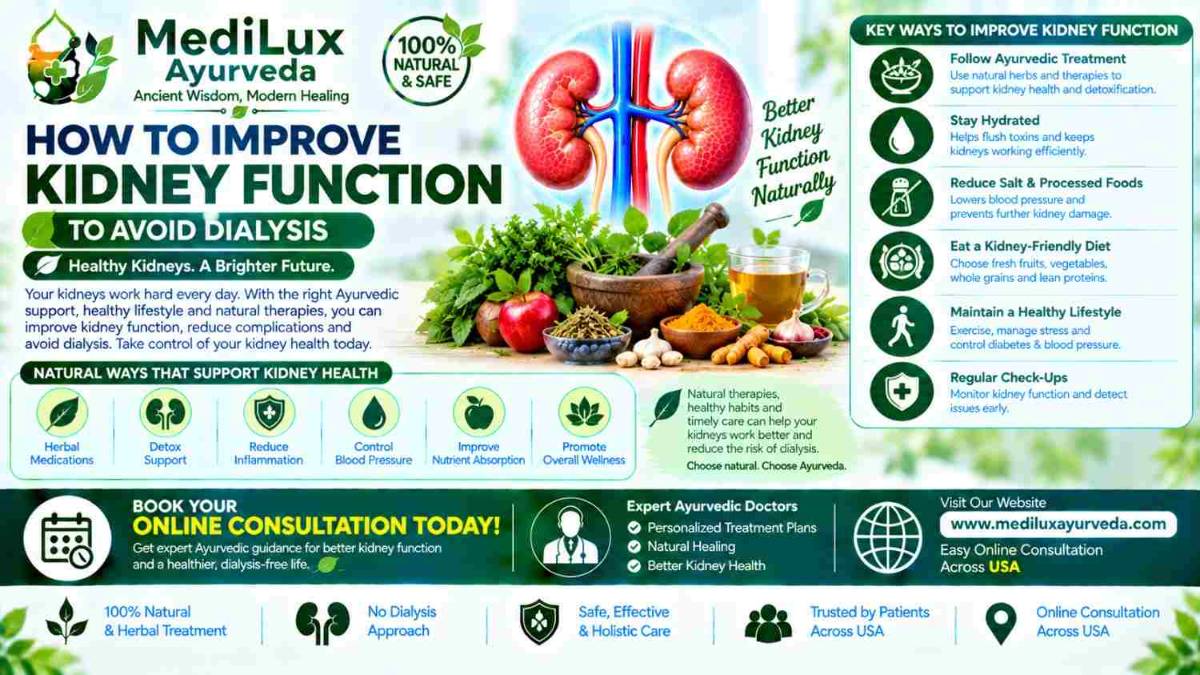
MediLux Ayurveda offers an educational website and online consultation services for people in the USA and UK interested in learning about kidney health and natural remedies.
Understand Your Kidney Function
The first thing to do in controlling kidney disease is to know how you are doing. Creatinine levels and estimated glomerular filtration rate (eGFR) are routinely checked via blood tests. Urine tests can measure the presence of the protein albumin which can be a sign of kidney damage.
Other factors such as blood pressure, blood sugar, use of medications, and medical history also factor into the best treatment plan. Regular monitoring can be helpful for detecting changes early and help clinicians adjust care if necessary.
1. Manage Blood Pressure and Blood Sugar
Chronic kidney disease is often caused by high blood pressure and diabetes. Control blood pressure and blood glucose levels in the target range can help prevent additional kidney damage.
Take prescribed medications as directed, follow your healthcare professional's advice and have regular check-ups. Never stop or adjust any medicine without talking to the doctor that is treating you.
2. Follow a Kidney-Friendly Eating Plan
Proper nutrition is very important in kidney care. Depending on the individual, a balanced eating plan may consist of fresh vegetables, appropriate portions of fruit, whole grains and appropriate protein portions.
Those with decreased kidney function may have to limit sodium, potassium, phosphorus, protein, and/or fluid. These needs are different and a renal dietitian can make a plan according to the laboratory results and the stage of the kidney disease.
Excess sodium can be beneficial in lowering blood pressure and fluid retention. Don't drastically change your diet, dieting without a professional's advice.
3. Stay Physically Active
Exercise regularly to help maintain cardiovascular health, blood pressure and overall wellness. For many, walking, cycling or light exercise might be appropriate, depending on their health and physical capabilities.
Begin at a moderate level and discuss activities with your health care provider, especially with advanced kidney disease or other health conditions.
4. Be Careful with Medicines and Supplements
Some medications may be toxic to the kidneys and/or may need dosage adjustments if kidneys are impaired. Some people with kidney disease may be at risk with nonsteroidal anti-inflammatory drugs (NSAIDs), like ibuprofen and naproxen.
There's also a need for caution when it comes to herbal products and supplements. Just because a product has natural ingredients doesn't mean it's automatically safe, and some products may contain ingredients that have a negative impact on kidney function, as well as ingredients that can interact with prescribed medications.
Talk to your nephrologist or pharmacist before consuming an herbal preparation or supplement.
5. Follow Medical Advice About Fluids
Many people need to drink plenty of liquid, but excessive amounts of liquid does not necessarily help kidney function. People with severe kidney disease, swelling, heart problems or very little urine production might require fluid restrictions.
Do not set a specific amount of water to drink each day but rather follow your clinician's advice. The dosage is dependent on your health, amount of urine produced, and other health conditions and factors.
6. Avoid Smoking and Limit Excessive Alcohol
Smoking can negatively affect how blood vessels function and raise the risk of cardiovascular disease, especially for those with kidney disease. Breaking the habit of smoking can help maintain overall health.
Limit alcohol use and check with your health care provider about alcohol restrictions due to medical history, medications and kidney function.
7. Attend Regular Kidney Checkups
Kidney disease can do this without any apparent symptoms. Blood and urinary tests are used periodically to track eGFR, creatinine, urinary albumin and electrolyte levels.
If you experience any abnormal fatigue or urination, swelling that persists or other symptoms that concern you, early medical attention is important. Urgent medical evaluation is indicated by severe shortness of breath, chest pain, confusion, and/or significantly diminished urine output.
Can Kidney Function Improve Enough to Avoid Dialysis?
Treatment depends on the cause. In some patients with acute kidney injury, the injuries may heal after treatment of the cause. However, chronic kidney disease can develop and existing damage can be irreversible.
Treatment aims to resolve the cause of the problem, control complications, maintain as much kidney function as possible and plan for the appropriate care. Dialysis is recommended on the basis of an individual's overall condition, symptoms, laboratory results and clinical needs and not as a result of a single test.
How to Improve Kidney Function to Avoid Dialysis is the starting point of an informed discussion with a competent health care provider, and not an excuse to hold off from the recommended treatment.
Explore Kidney Wellness Resources with MediLux Ayurveda
MediLux Ayurveda provides an online consultation service for people who are interested in complementary Ayurvedic wellness techniques and kidney care in the USA and UK. A consultation may be a time to share concerns and questions about services available.
It is recommended that everyone who is thinking about taking any kind of Ayurvedic herbs and other alternative treatments check them with a nephrologist. These should not be used as a substitute for evidence-based kidney treatment, prescribed medication or dialysis when medically required.
Book Your Online Consultation
The first step to kidney health is to take the right steps and consult the right professionals. Follow the kidney wellness resources offered by MediLux Ayurveda and know more on How to Improve Kidney Function to Avoid Dialysis.
Check the website and complete the form to get online consultation.
Medical disclaimer: This article is intended for educational purposes only, and is not a substitute for professional medical advice. There is no dialysis-preventing treatment. Always ask your nephrologist before making changes to your treatment or using herbal products.
healthcare
|
|
|---|---|
|
|
|
- Time: 0.057, SQL: 13