-

-
DASH Diet for Kidney Disease: Understanding Healthy Eating and Kidney Nutrition
- mediluxayurveda4 57 Minutes+ 2
Eating healthy foods is just one way to take care of your kidneys. Food can affect blood pressure, fluid balance and mineral uptake by kidneys. For those interested in learning how the principles of the "DASH Diet" for heart health can be incorporated into a kidney-friendly diet, the DASH Diet for Kidney Disease is an important topic.
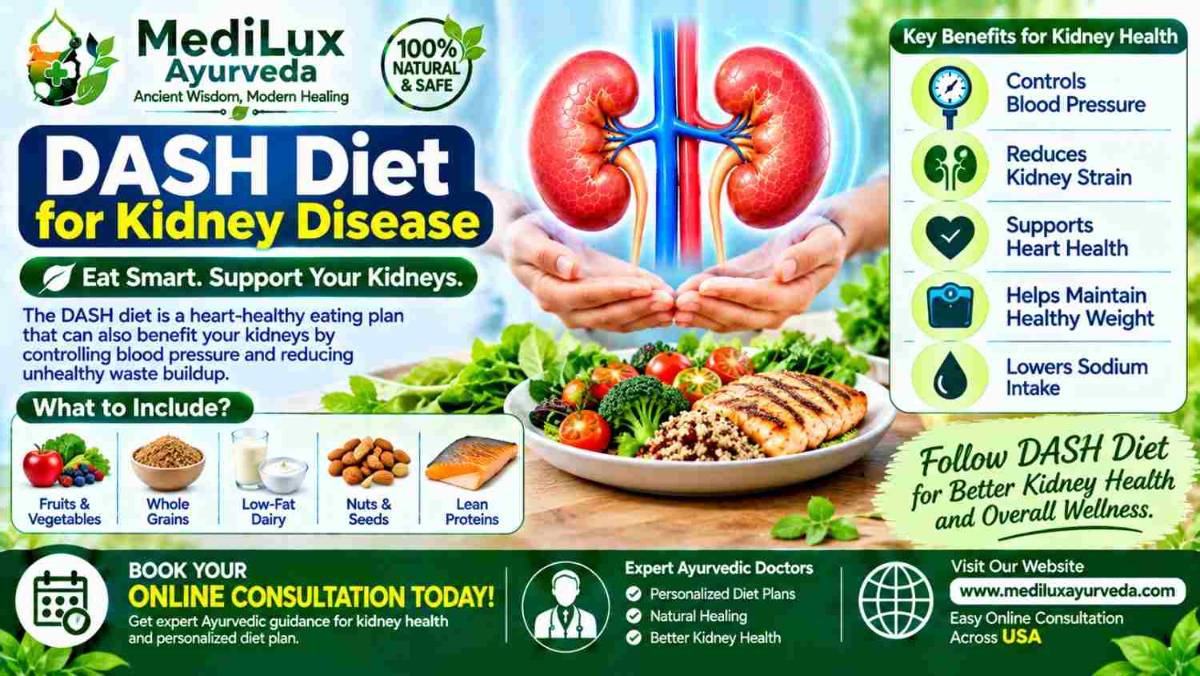
DASH is an acronym for Dietary Approaches to Stop Hypertension. An eating plan that helps control blood pressure by making healthy food choices and keeping sodium intake low. While it can be beneficial to certain people, people with kidney disease may need to make changes to their diet according to their kidney function and medical problems.
For those in the USA and UK interested in kidney wellness, the educational resources and online consultation options offered by MediLux Ayurveda allow them to delve into Ayurvedic lifestyle advice.
What Is the DASH Diet?
The DASH diet recommends eating a diverse range of healthy foods, such as:
- Fruits and vegetables
- Whole grains
- Low-fat dairy foods (where appropriate)
- Lean protein sources
- Nuts, seeds and legumes, when appropriate, in appropriate amount
It also recommends reducing excess amounts of sodium, added sugars, and highly processed foods.
This is a diet that can contribute to maintaining a healthy blood pressure level. Blood pressure is closely linked to kidney disease and it is also a risk factor for kidney failure, so controlling blood pressure is essential to kidney care.
How Can the DASH Diet Support Kidney Health?
The DASH diet emphasizes nutrition balance and salt awareness. These principles can help individuals who require to manage their blood pressure as part of their kidney-care plan.
Its overall strategy has the potential to bring with it the following benefits:
1. Encouraging Lower Sodium Intake
Too much sodium can lead to high blood pressure and water retention. Switching to foods low in highly processed foods, packaged snacks and salt may help keep blood pressure in check.
Knowing what is on the nutrition label and cooking at home can help you keep an eye on sodium intake.
Supporting Balanced Nutrition
The DASH eating pattern encourages a variety of food groups. Whole grains, vegetables, fruits and protein foods can be used for appropriate portions to meet the fiber needs and nutritional balance.
But there are some foods that are part of the DASH diet that might need to be restricted for people with kidney disease.
Encouraging BP Knowledge
It's critical to monitor blood pressure regularly for those who have kidney disease. Eating a healthy diet, exercising, taking the right medicine, and getting regular medical evaluations can be used together to help maintain a healthy blood pressure.
Important Dietary Considerations for Kidney Disease
The standard DASH diet may not be right for all patients with kidney disease. If kidney function is impaired, it may impact the body's ability to control potassium, phosphorus, sodium and fluid levels.
Prior to using this eating plan, keep the following in mind.
Potassium
There are many foods high in potassium, including fruits and vegetables. As kidney function decreases, some people can have high levels of potassium in the blood.
Blood tests can help determine the appropriate amount and/or types of potassium-free alternatives a healthcare provider may recommend.
Phosphorus
Phosphorus is found in dairy foods, nuts, seeds, beans and packaged foods. For some people with chronic kidney disease, it is important to keep the level of phosphorus in your diet within normal limits.
Individual laboratory results and professional counsel should be taken into consideration when selecting foods.
Protein
Protein helps to maintain and repair muscles and tissues. But, those with non-dialysis CKD (chronic kidney disease) may need to reduce protein, and those on dialysis may have different protein needs.
This will depend on the amount of kidney function, nutritional status, and treatment.
Sodium and Fluid
More sodium waste can help to control blood pressure and fluid balance. The amount of fluids may be prescribed for some people who have advanced kidney disease.
Every person has an individualized amount of water they need each day and a fixed amount is not appropriate for everyone.
Practical Tips for Adapting the DASH Diet
The kidney-friendly diet is a personalized diet—not one that is exactly the same as a standard DASH diet.
Helpful steps include:
- Review lab results: Discuss potassium, phosphorus and kidney function lab results with health care professional.
- Use appropriate fruit and vegetables: Select fruits and vegetables based on the personal potassium needs.
- To cut back on processed foods: Check labels and avoid foods that are high in sodium.
- Choose correct amounts of protein: Based on stage of kidney disease and treatment.
- Take blood pressure measurements: Take and keep copies of blood pressures, and discuss with health care providers during checkups.
- Follow a dietitian's advice: A registered dietitian with expertise in kidney nutrition can design a realistic diet plan.
Can Ayurveda Complement Kidney Wellness?
Ayurveda has always laid special importance on balanced diet, daily habits, and lifestyle in general health. Others try these treatments in addition to traditional medical care.
But just because something is made from herbs doesn't make it safe for people with kidney disease. Some herbs and supplements can interact with the medications a person is taking, or they can impact how the kidneys work. Always talk with their health care provider about them.
Do not use Ayurvedic well being instructions in place of kidney perform, prescribed medications or expert therapy.
Explore Kidney Wellness Guidance with MediLux Ayurveda
It can be useful for people to know about the DASH Diet for Kidney Disease when planning their meals and diet to help control their blood pressure. The best diet is determined by kidney function, lab values, medication history and personal nutritional needs.
If you're in the USA or UK and interested in learning more about Ayurvedic wellness techniques and kidney health, you can consult with MediLux Ayurveda through their education and online consultation services.
Please go to the MediLux Ayurveda website, fill in the online form and schedule a consultation to chat about advice for wellness that is best for you.
Please note: This article is intended as a learning resource and is not a substitute for medical advice. Individuals with kidney-related conditions may need to make extensive changes to the DASH diet. Please consult a nephrologist or registered dietitian before making changes to your diet, taking supplements, or changing your treatment.
healthcare
|
|
|---|---|
|
|
|
- Time: 0.024, SQL: 13