-

-
What makes a floor protection film last through weeks of heavy site traffic
- weslycapi 6 Days+ 13
What makes a floor protection film last through weeks of heavy site traffic
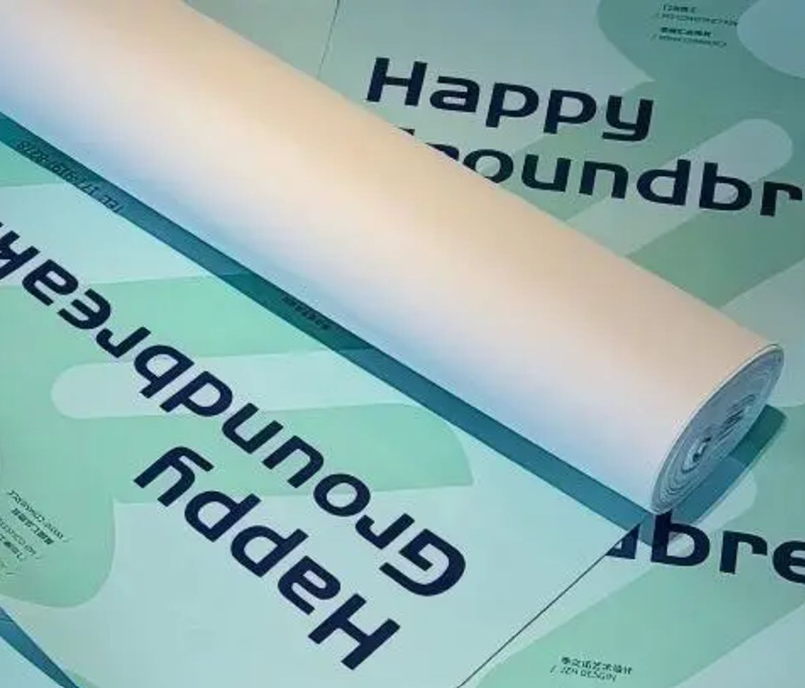
A floor protection film survives weeks of heavy site traffic when four properties are right at the same time. It needs enough thickness to spread point loads from ladder feet and trolley wheels, enough tear resistance to survive dragged edges and doorway turns, enough cushioning to absorb the small impacts before they reach the floor beneath, and a surface that lets grit sit on top of it instead of grinding through. Weeks of boots alone rarely kill a film. Boots plus one missing property do, usually at a seam or a doorway, and usually in the second week.
The property that decides the rest is the adhesive. It has to hold its grip for weeks without creeping at the edges, and then let go cleanly without hardening into marks on the floor it protected. That is what makes a durable floor film durable: not one hero property, but every property holding its level while traffic does its worst. It is a buying decision before it is a laying one, because no laying technique can add thickness or tear strength that the roll never had. The film comes in graduated thicknesses and in low, medium and high tack grades, so the right combination can be chosen for the floor before the roll reaches the site.
Thickness is the starting point, not the whole story
Thickness is where durability starts, because a thicker film spreads the load of a scaffold foot or a pallet truck wheel over more of the floor, and gives grit something to sink into that is not the tile beneath. It also resists the small punctures that thin films collect from dropped screws and swarf. But thickness alone is a blunt answer. A thick film with a weak tear strength still splits at the first dragged ladder, and a thick film laid in narrow strips still fails at its seams. Numbers open the conversation; they do not finish it. The rest of the story is in the material.
Cushioning is what saves the floor beneath
A floor rarely complains about weight. It complains about impact: the corner of a dropped tile, the foot of a ladder set down hard, a toolbox slid the last metre. Films with a cushioned build, a woven layer or a soft foam like backing, absorb these blows and spread them, instead of passing them straight through to the glaze or the varnish. On hard, glossy floors this cushioning is often the difference between a film that looks worn and a floor that actually is. Protection is measured underneath, not on top. The film is allowed to die. The floor is not. A worn film over a perfect floor is a success.
Adhesive that ages gracefully
Over weeks, the adhesive does as much work as the film. It has to hold the sheet still while boots pivot on it thousands of times, through cold mornings and warm afternoons, without doing either of its two favourite tricks: letting go at the edges, or gripping harder and harder until removal becomes a fight. Films that last are built with adhesives chosen for stability across that whole period, not for grab on day one. When the edges stay down, grit stays out, and most other failures never get the chance to start. Edges are where weeks are won or lost. Stability is a quiet virtue.
Seams and doorways take the real punishment
Ask a used film where the job happened and it will tell you: at the doorways, along the corridor, and in a ring around the kettle. Traffic is never evenly spread. It concentrates where people turn, pause and put things down, and it attacks the seams between strips, working a loose edge up until a boot catches it. Films survive long jobs when seams are overlapped in the direction of travel, taped where they cross doorways, and treated as part of the structure. A floor is only as protected as its busiest square metre. Protect the lanes and the rest follows.
The floor underneath still has a say
No film lasts well on the wrong floor. A sheet that behaves on ceramic tile can creep on polished stone, skate on laminate, or hold too firmly on a soft varnish. Timber floors add their own condition, since a newly finished wooden floor is still curing and breathing, and it wants a film that respects that instead of sealing it tight for a month. Durability is a partnership between the roll and the surface. When the two are matched, weeks pass quietly. When they are not, the film gets blamed for an argument it did not start. Matching is a five minute conversation that saves five weeks.
What lasting film looks like at the end
The test of a durable film is a boring one. At the end of week six it should look tired in the traffic lanes, dusty at the edges, and essentially unchanged in its behaviour: still flat, still stuck, still keeping the grit on its own back. Then it should peel away in long sheets and leave a floor that looks like the job never happened. Films that achieve that are not exotic. They are simply specified properly, for thickness, build, adhesive and floor, by people who have watched the cheap version fail in the same corridor. Experience is just failure, remembered. And remembered cheaply, if the lesson is learned once.
What,makes,A,floor,protection,Film,Last,Through,weeks,OF,heavy,site,Traffic
|
|
|---|---|
|
|
|
- Time: 0.058, SQL: 25