-

-
BC Game Clone Script To Start Crypto Casino
- hannahcharles 2025-8-12 172
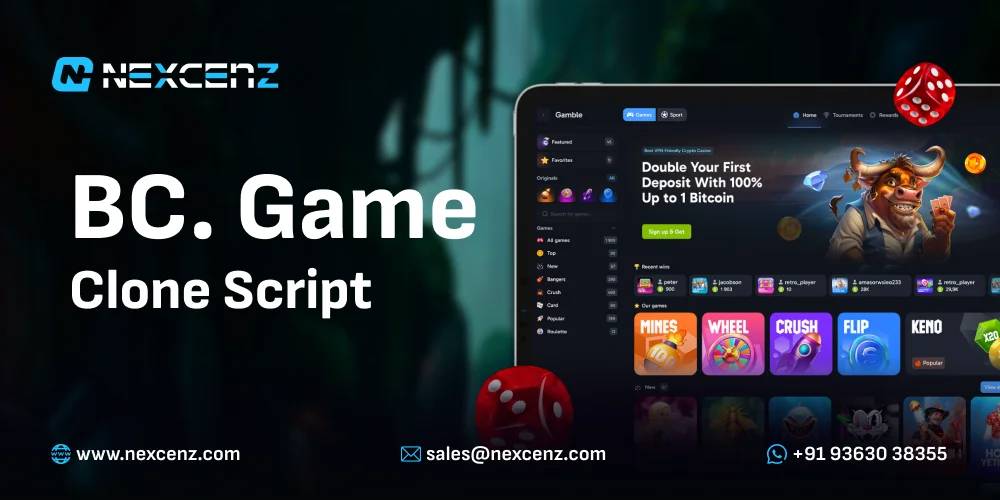
BC Game Clone Script is a ready-to-deploy crypto casino software that replicates the core features of the BC Game platform. It enables entrepreneurs to launch a feature-rich blockchain-based iGaming platform with support for multiple cryptocurrencies, provably fair gaming, seamless crypto transactions, and real-time payouts. The script includes popular casino games, a powerful admin dashboard, multi-wallet integration, referral systems, and security features like DDoS protection and two-factor authentication. Fully customizable and scalable, it allows you to add unique game modes, native tokens, and promotional features. Ideal for startups and gaming businesses, the BC Game Clone Script reduces development time and costs while delivering a secure, engaging, and revenue-generating online casino experience
Bc,game,clone,script
|
|
|---|---|
|
|
I never walk into a casino hoping to get lucky. Hope is for tourists. Hope is for the guy in the wrinkled shirt feeding twenties into a slot machine because his wife told him to "go have fun." That’s not me. I walk in knowing exactly what the house has, and exactly what I’m going to take from them. It’s a transaction. A very high-stakes transaction. My first real encounter with Casino Vavada wasn’t about bright lights or the sound of champagne corks. It was 2:47 AM, I was on my third cup of black coffee, and I was staring at a volatility index like a mechanic reading a faulty engine. People think professional play is about adrenaline. It’s not. It’s about math. It’s about pattern recognition. And honestly? It’s about knowing when the algorithm is tired. These platforms, especially Casino Vavada, run on cycles. The house edge is a fact of life—I don’t fight that. I exploit the gaps between the facts. When I first registered, I didn’t even look at the slots. I went straight to the live dealer tables. Blackjack. Strictly blackjack. I’d spent six months practicing card counting offline, using actual decks of cards spread out on my kitchen table while my neighbor banged on the wall asking me to keep it down. I wasn’t making noise. I was training. The first three weeks were brutal. I’m not going to sit here and tell you I hit a jackpot on day one and rode off into the sunset. I lost. A lot. I had a system—progressive betting, adjusting my units based on the count—but variance is a cruel mistress. There were nights I’d deposit five hundred, grind for four hours, and walk away with six-fifty. A hundred fifty bucks profit for four hours of mental gymnastics. That’s less than minimum wage. I remember staring at my reflection in the black screen of my monitor, thinking, You’re an idiot. Just go drive for Uber. But I didn’t quit. Because I knew something the casual players didn’t. I knew that the long session was the weapon. Most people play until they win, then run. I play until the math swings back in my favor, and I stay. It happened on a Thursday. No special reason. I was deep into a session on Casino Vavada, the dealer was showing a six, and the count was hot. I pushed out a bet that was probably ten times my usual unit. My heart didn’t even race. It felt like filing taxes. I doubled down on eleven. Five of hearts. Dealer flips a nine, then pulls a ten. Bust. That hand alone netted me eight hundred. I played for another three hours, never letting the count drop below +2 without lowering my bets. I walked away with four thousand two hundred dollars. That was the moment I stopped calling it gambling and started calling it work. My wife—well, she doesn’t ask anymore. She used to hover behind me, biting her nails. Now she just glances at my face when I close the laptop. She reads the result there. When I’m up, I’m quiet. When I’m down, I’m annoyingly cheerful. It’s a coping mechanism. But honestly, Casino Vavada made it easier for us to breathe. One month I paid off her car loan in a single session. I wasn’t even trying to be a hero. I just read the table right, stayed disciplined, and let the numbers do the talking. It’s surreal, using winnings from a digital dealer to buy groceries. You’d think it would feel dirty. It feels clean. It feels like chess. There’s a specific loneliness to this life, though. You can’t talk to casual players about it. They either think you’re a degenerate or a wizard. I’m neither. I’m just a guy who realized that most people quit too early. They get scared when they’re up, and they get desperate when they’re down. The trick is to invert that. Get greedy when you’re winning, get surgical when you’re losing. I remember one session where I was down twelve hundred in the first twenty minutes. Bad beats. Dealer pulling twenty-ones like they were going out of style. A normal person would have tilted, chased the loss, and ended up down three grand. I did the opposite. I dropped my bet to the table minimum and watched. I just watched for forty-five minutes. I didn’t play; I observed. I was looking for the rhythm of the shuffle, the speed of the dealer’s hands, the way the cards fell off the shoe. I wasn’t playing blackjack anymore. I was playing the players. And when the rhythm shifted, I pounced. By sunrise, I was up twenty-two hundred. I don’t tell people this to brag. I tell them because most folks assume that winning is about luck. It’s not. It’s about stamina. It’s about sitting in the chair long after the excitement fades, long after it stops being fun, and doing the boring thing because the boring thing works. Casino Vavada isn’t my friend. It’s my opponent. And I respect it enough to prepare for the fight. Look, I’m not going to pretend I never lose. Last month I had a session that cut my bankroll by thirty percent. It happens. The house always has the edge, and anyone who tells you otherwise is selling a system or a dream. But the difference between me and the tourist is that I don’t let the loss define the night. I walk away, I recalculate, and I come back the next day like nothing happened. That’s the real secret. Not the counting. Not the betting strategy. The forgetting. I’m still playing. Still grinding. Still waking up at odd hours to catch the European tables when the liquidity is high. My mother thinks I’m in cybersecurity. I don’t correct her. It’s easier this way. But when I’m alone, staring at the digital felt, I know exactly what I am. I’m a professional. And in this profession, you don’t hope for the win. You just wait for the math to circle back to you. It always does. Eventually. |
|
|
|
- Time: 0.065, SQL: 17